Summary
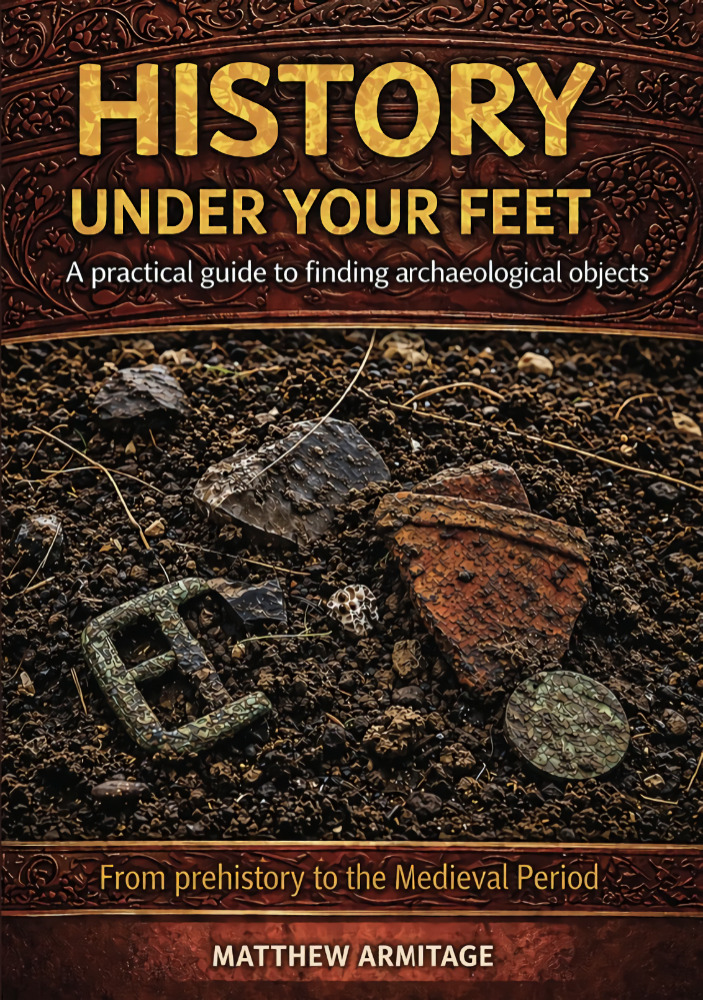
A practical and accessible guide to identifying archaeological finds from Britain’s past. Written for walkers, detectorists, history enthusiasts and beginners alike, the book helps readers recognise and understand the objects, materials and traces of history that survive beneath our feet.
History Under Your Feet is a practical and accessible guide to recognising archaeological objects found within everyday landscapes. Drawing on years of archaeological experience and field observation, the book introduces readers to the materials, forms and patterns that help identify artefacts from Britain’s past.
Written for beginners, walkers, metal detectorists and anyone interested in archaeology, the guide explains how historical objects can appear in ordinary places such as ploughed fields, riverbanks, gardens and footpaths. Rather than focusing on excavation itself, the book encourages readers to develop observational skills and confidence in recognising finds through careful examination of shape, texture, weight and material.
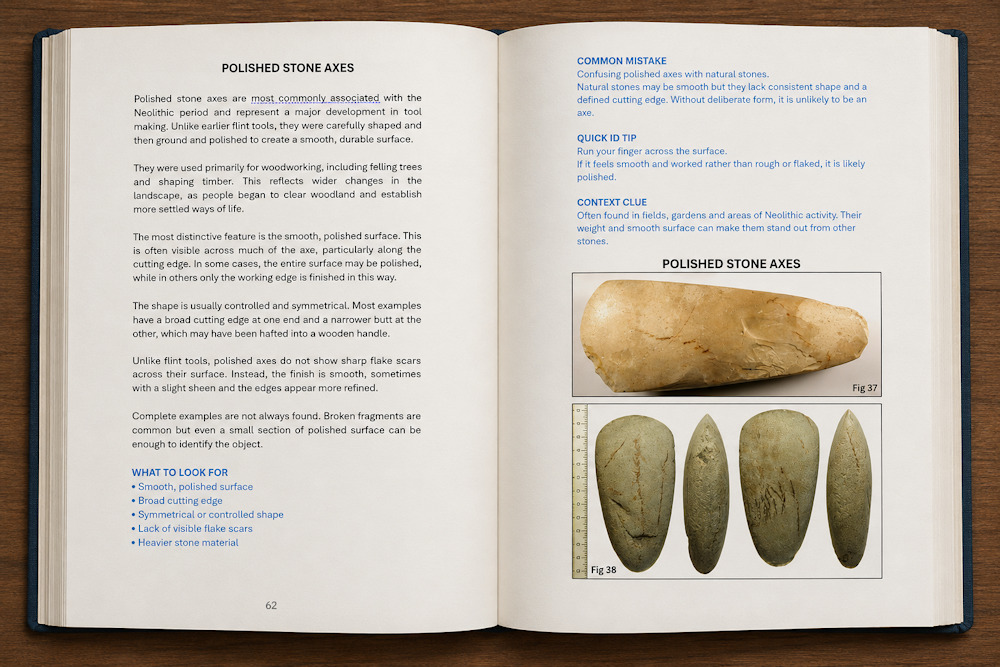
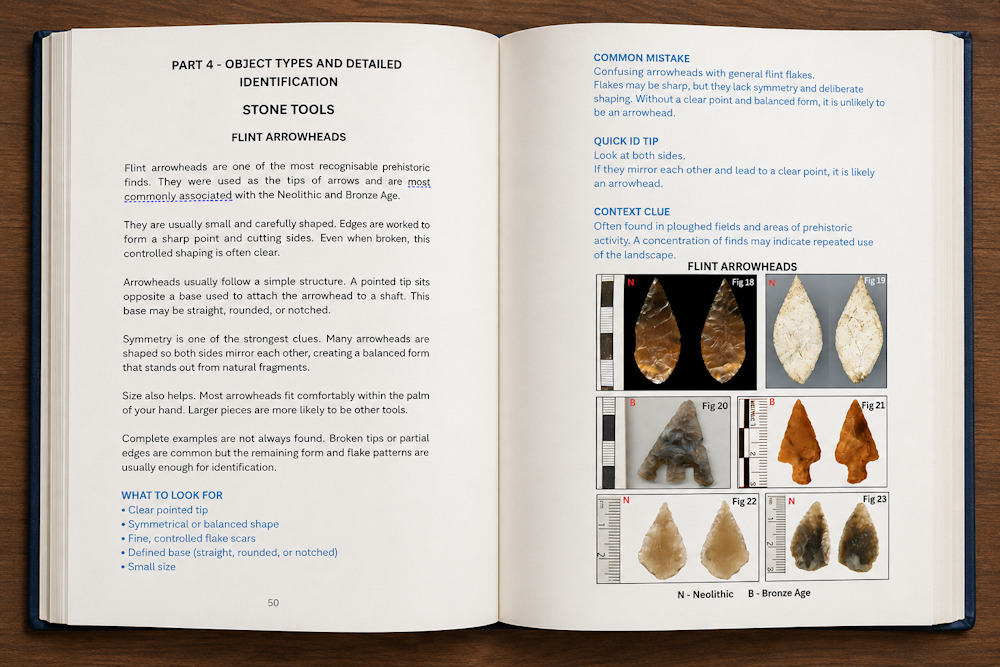
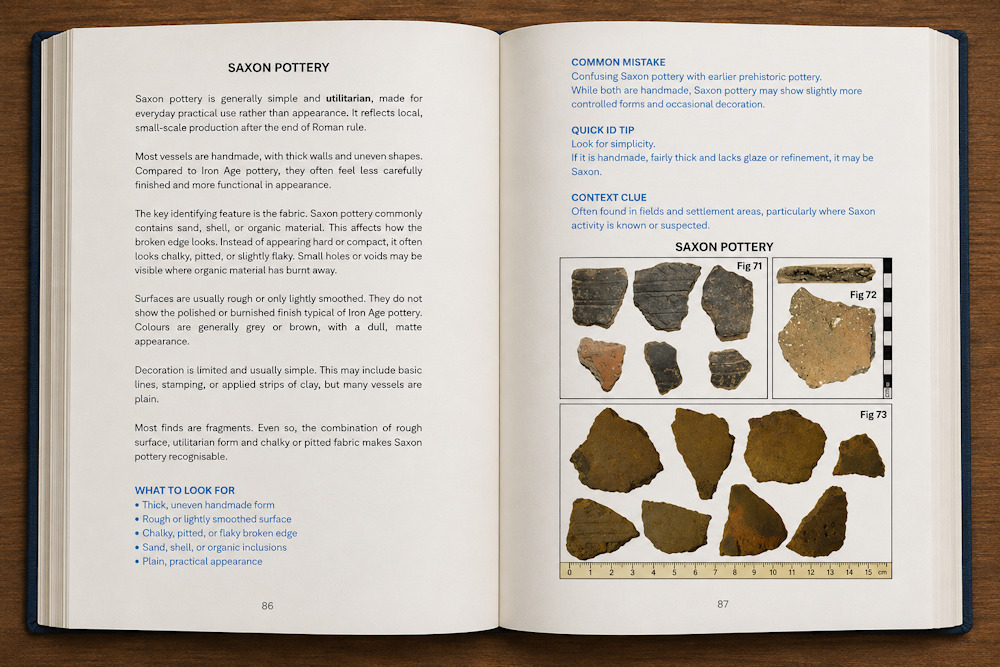
Covering the major archaeological periods in Britain from the Palaeolithic through to the Medieval period, the guide provides a clear historical timeline alongside explanations of how tools, pottery and other materials changed over time. Readers are introduced to common finds including flint tools, pottery, metal objects, glass and worked bone, with practical advice on how to distinguish archaeological material from natural objects or modern debris.
A major focus of the book is identification, helping readers recognise object types such as arrowheads, scrapers, blades and hand axes through clear explanations and illustrations. The guide also encourages responsible engagement with archaeology and aims to help people develop a closer connection with the history that survives beneath their feet.
Combining practical guidance with accessible archaeological interpretation, History Under Your Feet seeks to make Britain’s past understandable for a wider audience while encouraging curiosity about the landscapes people encounter every day.